







CRYPTO TOKEN DEVELOPMENT SERVICES
Crypto Token Development Company Building Audited Tokens and the Economics Behind Them
A crypto token development company designs token economics, writes and audits the smart contracts, and deploys the token to its target blockchains. Pixel Web Solutions builds utility, governance, security, stablecoin, NFT, and real world asset tokens across Ethereum, BNB Chain, Solana, and Layer 2 networks, with vesting contracts, multi-signature control, and independent audit on every deployment.
ERC-20, BEP-20, SPL, ERC-721, ERC-1155, and permissioned standards. Tokenomics modelled before deployment, because supply cannot be changed afterwards.
Get your free token build plan
Tell us your token purpose, chain, and distribution plan. Within 48 hours you get a contract feature list, an audit timeline, and a fixed-price estimate.
- Tokenomics and vesting modelled before a single contract is written
- Independent smart contract audit included, with a published remediation log
- Contract permissions designed for investor trust, not just for your convenience
78
Blockchain and Web3 projects delivered
2 weeks
Fastest audited token deployment
95%
Contracts shipped with independent audit
50
Blockchain networks deployed to
A token contract is permanent. Almost every expensive mistake is made before deployment.
Anyone can deploy a token in an afternoon. What cannot be undone afterwards is the supply, the distribution, the permissions you gave yourself, and whether the thing you created is a security in the jurisdictions you sell into. Four decisions made before deployment account for nearly every token project that fails on something other than demand.
Tokenomics designed after the contract
Supply, emission schedule, and allocation are written into the contract and cannot be changed later without a migration that costs you every holder. We model distribution, vesting, and emissions before writing code.
Permissions that destroy investor trust
A contract where the owner can mint freely, pause transfers, or blacklist wallets will be flagged by every auditor and token scanner your investors use. We design permission structures deliberately and document exactly what you can and cannot do.
Immutable bugs
A deployed contract with a flaw usually means a migration and a new token, not a patch. Independent audit, testnet deployment, and full lifecycle simulation happen before mainnet, never after.
Securities exposure ignored
How a token is marketed and distributed determines whether regulators treat it as a security, and the answer differs by jurisdiction. We build the contract-level controls that support your legal position, and we tell you early when you need proper legal advice.
Our Crypto Token Development Services
Nine build tracks covering every token type and the economics behind them. Delivered by the same team behind our wider blockchain software development company capability.
A crypto token development company provides tokenomics design, smart contract development, vesting and distribution contracts, multi-chain deployment, contract verification, security auditing, liquidity pool setup, exchange listing support, and post-launch contract maintenance.
Utility Token Development
ERC-20, BEP-20, and SPL tokens with configurable supply, decimals, mint and burn logic, permit support, and access control. The standard token for product access, payments, and ecosystem incentives.
Governance Token and DAO Voting
Snapshot-capable tokens with delegation, voting weight, proposal thresholds, and timelock-controlled treasury execution, so governance is enforced on-chain rather than by convention.
Security Token and STO Development
Permissioned standards such as ERC-3643 and ERC-1400 with transfer restrictions, investor whitelisting, jurisdiction rules, lock-up enforcement, and cap table integration for regulated offerings.
Stablecoin Development
Fiat-backed, crypto-collateralized, or hybrid stablecoins with minting and redemption controls, collateral management, attestation and reserve reporting hooks, and pause and blacklist controls where regulation requires them.
NFT and Multi-Token Development
ERC-721 and ERC-1155 collections with metadata standards, on-chain or IPFS storage, royalty enforcement, allowlist minting, reveal logic, and marketplace compatibility.
Real World Asset (RWA) Tokenization
Tokenized representation of property, funds, commodities, or receivables, with permissioned transfer, identity binding, off-chain custody attestation, and reporting. Liquidity pool creation, locking and listing support, or a full sale run on our white label crypto launchpad development platform.
Tokenomics Design and Vesting Contracts
Supply modelling, allocation across team, investors, treasury, and community, emission schedules, cliff and linear vesting contracts, staking and reward mechanics, burn and sink design, and treasury controls. DEX listing is immediate, and centralized listing follows the process covered in our crypto exchange development services.
Smart Contract Audit and Security
Independent audit with a published remediation log, static analysis, reentrancy and economic attack review, testnet lifecycle simulation, and multi-signature ownership setup before mainnet.
Deployment, Listings and Post-Launch Support
Mainnet and multi-chain deployment, explorer verification, liquidity pool creation and locking, DEX and CEX listing support, data aggregator submissions, and ongoing contract maintenance.
Not sure which token type you need?
Utility, governance, security, and stablecoin tokens have completely different contract standards, compliance exposure, and launch paths. Send us what the token is meant to do. We will tell you which type it actually is, which is not always the one people expect.
Three ways to work with our token development team
Pick the level of support that matches your stage and how much of the economics you have already settled.
Standard Token Deployment
Duration
2 to 4 weeks
A standard token on a proven contract template, configured with your supply, permissions, and vesting, audited and deployed. Minimal custom logic, lowest cost and risk.
Best for:
Projects with tokenomics already decided and a straightforward utility or governance token.
Includes:
Contract configuration, vesting setup, audit, testnet deployment, mainnet deployment, explorer verification.
Tokenomics Plus Custom Contracts
Duration
6 to 12 weeks
Economic design and custom contract logic together: staking, rewards, burn mechanics, fee capture, treasury controls, or a bespoke distribution model.
Best for:
Projects whose token mechanics are part of the product rather than an afterthought.
Includes:
Tokenomics modelling, custom contract development, audit, simulation, deployment, and documentation.
Security Token, Stablecoin or RWA Build
Duration
10 to 20 weeks
Permissioned standards with transfer restrictions, investor whitelisting, jurisdiction rules, and reporting hooks, built alongside your legal counsel's requirements.
Best for:
Regulated offerings, tokenized assets, and issuers with compliance obligations.
Includes:
Everything in the custom track, plus permissioned standard implementation, compliance controls, and reporting integration.
A proven token development process, from economics to mainnet
Five stages. Every stage ends in a deliverable you own and can hand to an auditor, an investor, or a regulator.
Purpose and Compliance Scoping
We define what the token must do, who receives it, how it is distributed, and where your holders are, then flag where securities treatment is likely. Output: a token specification and a compliance risk note for your counsel.
Tokenomics and Contract Design
We model supply, allocation, emissions, vesting, and any staking or burn mechanics, then specify the contract features and permission structure that enforce them. Output: a tokenomics model, a contract specification, and a fixed-price scope.
Contract Development and Testnet
Contracts written against audited libraries, with full test coverage, deployed to testnet for a complete lifecycle rehearsal including vesting releases and any staking cycles. Output: verified testnet contracts and a test report.
Independent Audit and Remediation
Third-party audit, static analysis, economic attack review, and a documented remediation cycle. Output: an audit report and remediation log you can publish.
Mainnet Deployment, Liquidity and Handover
Mainnet deployment, explorer verification, multi-signature ownership transfer, liquidity pool creation and locking, aggregator submissions, and documentation handover. Output: a live, verified, audited token and a runbook your team can operate.
Get your tokenomics reviewed before anything is deployed
A 45-minute review of your token plan. We pressure-test your supply and emission model, vesting schedule, contract permissions, and compliance exposure, then tell you what it actually costs and how long it actually takes. No obligation, no sales script.
- Whether your supply and emission schedule survives contact with a real market
- Which contract permissions will be flagged by auditors and token scanners
- A realistic timeline with audit turnaround and listing dependencies mapped
Key Benefits of Choosing Our Crypto Token Development Services
What projects get from a team that treats economics and contracts as one problem.
Economics designed before code
Supply, allocation, and emissions are modelled first, because they are permanent once deployed. Most token failures trace back to a distribution decision, not a bug.
Audited by default
Every contract ships with an independent audit and a remediation log you can publish. Exchanges, launchpads, and serious investors ask for it, and an unaudited token narrows your options immediately.
Permission structures that build trust
We design what the owner can and cannot do deliberately, and document it, so token scanners and due diligence reviews return a clean result rather than a warning.
Multi-chain from the start
Deploy to Ethereum, BNB Chain, Base, Arbitrum, Polygon, Solana, and other networks, with consistent supply accounting across chains.
Launch path, not just a contract
Liquidity pool creation and locking, explorer verification, aggregator submissions, and listing support, because a deployed contract with no market is not a launch.
You own everything
Full contract source, deployment scripts, documentation, and ownership keys transfer to you, with multi-signature control configured before handover. No retained admin access.
Who we build tokens for
We adapt the same audited foundations to nine very different token purposes.
| Industry | What we build |
|---|---|
| Web3 startups | a utility token that gives the product an on-chain economy. Web3 projects pair a token with a branded wallet from our crypto wallet development company team. |
| DeFi protocols | governance and incentive tokens with emissions and fee capture |
| Gaming studios | in-game currencies and asset tokens with sinks and faucets |
| DAOs and communities | governance tokens with delegation and treasury control |
| Fintechs and payment providers | stablecoins and settlement tokens |
| Asset managers and issuers | security tokens and tokenized funds |
| Real estate and commodities firms | RWA tokens with permissioned transfer |
| Brands and loyalty programmes | reward tokens and redeemable points on-chain |
| Exchanges and platforms | native platform tokens with fee discounts and staking tiers |
High-value token use cases we deliver
Utility token for a Web3 product
A token that pays for product access, rewards contribution, and aligns early users, with vesting that keeps the team credible. What it needs: clear utility, honest allocation, and vesting long enough to signal commitment.
Governance token with on-chain treasury
Voting weight, delegation, proposal thresholds, and a timelocked treasury that executes only what passes. What it needs: quorum design and timelock parameters set before launch, not after the first contentious vote.
Platform token with staking tiers
Fee discounts, tier-based benefits, and staking that creates a genuine reason to hold rather than sell. What it needs: benefits valuable enough to offset the opportunity cost of locking.
Stablecoin for payments or settlement
Minting and redemption controls, collateral management, and reserve reporting hooks. What it needs: a licence path and reserve arrangement settled before the contract is written.
Security token for a regulated raise
Permissioned transfer, investor whitelisting, lock-ups, and jurisdiction rules enforced at contract level. What it needs: legal counsel engaged from day one, with the contract built to their specification.
RWA token for a physical asset
Tokenized ownership or exposure with identity-bound transfer and off-chain custody attestation. Tokenized representation of property, funds, commodities or receivables, covered in full by our rwa tokenization company. What it needs: a custody and attestation arrangement that holds up under audit.
Chains, standards and infrastructure we build on
We build on the networks and standards your investors, auditors, and exchanges already work with.
Blockchain networks:
Fungible token standards:
NFT and multi-token standards:
Permissioned and regulated standards:
Contract infrastructure:
Supporting services:
Tools and Technologies We Use
Smart contracts
Testing and profiling
Deployment
Frontend
Backend and APIs
Storage
Infrastructure
Security
Token development driving real project outcomes
Fastest audited token from kickoff to mainnet
Contracts deployed with independent audit
Networks deployed to across projects
Figures reflect Pixel Web Solutions delivery data. Individual results depend on token type, contract complexity, and audit turnaround.
Token types compared: utility, governance, security, stablecoin, NFT and RWA
A utility token grants access or usage within a product. A governance token confers voting rights. A security token represents a regulated investment and carries securities obligations. A stablecoin holds a peg to another asset. An NFT represents a unique item. An RWA token represents a claim on a physical or off-chain asset. The classification is determined by how the token behaves and is sold, not by what it is called.
| Token type | Represents | Common standard | Compliance exposure | Typical build time |
|---|---|---|---|---|
| Utility | Product access or usage | ERC-20, BEP-20, SPL | Moderate, depends on how it is sold | 2 to 4 weeks |
| Governance | Voting rights | ERC-20 with delegation | Moderate | 3 to 6 weeks |
| Security / STO | A regulated investment | ERC-3643, ERC-1400 | Highest | 10 to 20 weeks |
| Stablecoin | A peg to fiat or an asset | ERC-20 with mint controls | High, licence often required | 10 to 20 weeks |
| NFT | A unique item | ERC-721, ERC-1155 | Lower | 3 to 8 weeks |
| RWA | A claim on an off-chain asset | ERC-3643, ERC-1400 | High | 12 to 20 weeks |
Contract permission decisions and what each one costs you
Every token scanner, auditor, and serious investor checks these before touching a token. Each is a genuine trade-off between operational flexibility and holder trust, and each must be decided before deployment.
| Permission | What it lets you do | What it costs you | Common resolution |
|---|---|---|---|
| Mint after launch | Issue new supply for rewards or growth | Flagged as inflation risk, most-cited red flag | Cap the supply, or gate minting behind a timelock and multi-sig |
| Upgradeable contract | Fix bugs and add features later | Holders must trust you not to change the rules | Upgradeable behind a timelock, or immutable with a documented migration plan |
| Pausable transfers | Stop transfers during an incident | Reads as a freeze risk to holders | Justify with a stated policy, or omit unless regulation requires it |
| Blacklist or freeze addresses | Meet compliance obligations | Strong centralization signal | Standard in stablecoins and security tokens, avoid in utility tokens |
| Transfer tax or fee | Fund treasury from trading volume | Breaks some integrations, deters market makers | Keep low and fixed, or avoid entirely |
| Retained owner privileges | Operational flexibility | Every retained privilege is a due diligence question | Transfer ownership to a multi-sig, then to a timelock |
| Unlocked team allocation | Immediate liquidity for the team | Read as exit risk, kills investor confidence | Cliff plus linear vesting, enforced by contract not by promise |
| Unlocked liquidity pool | Withdraw liquidity at will | The definitive rug-pull signal | Lock LP with proof, and publish the lock |
We document your final position on every row above, so your due diligence answers are ready before anyone asks. These decisions are permanent and public. Our free review works through each one with you in 45 minutes.
Portfolio - Our Work in Action

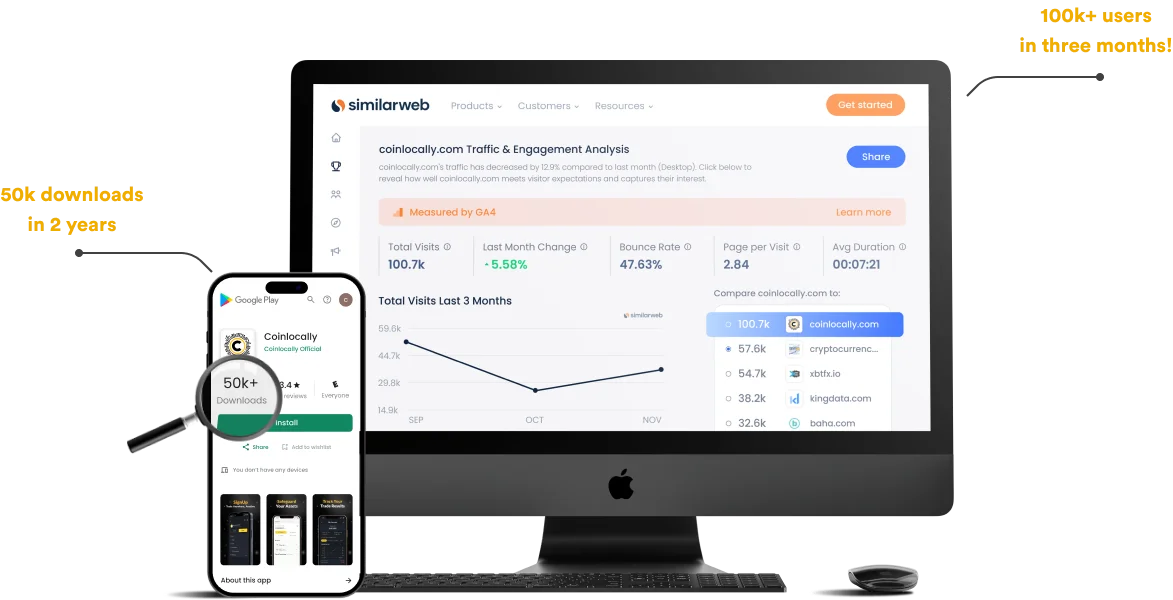
Coinlocally, the thriving cryptocurrency hub incorporates Centralized, DEXs, and an NFT marketplace – all under one roof!
Read More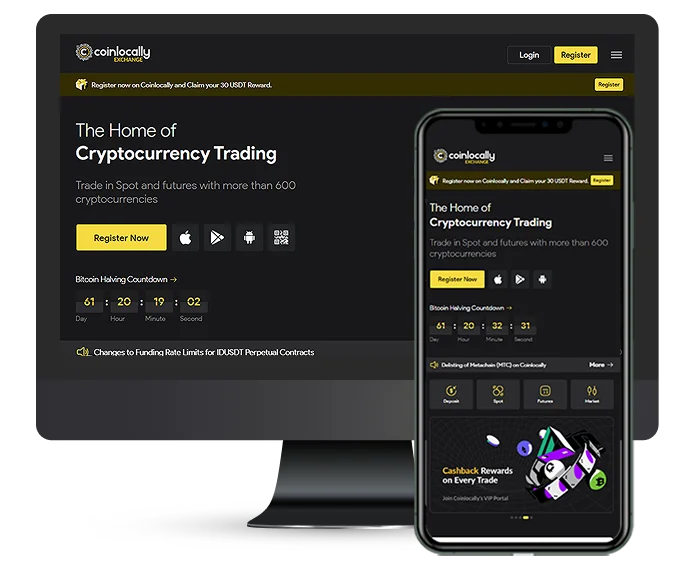

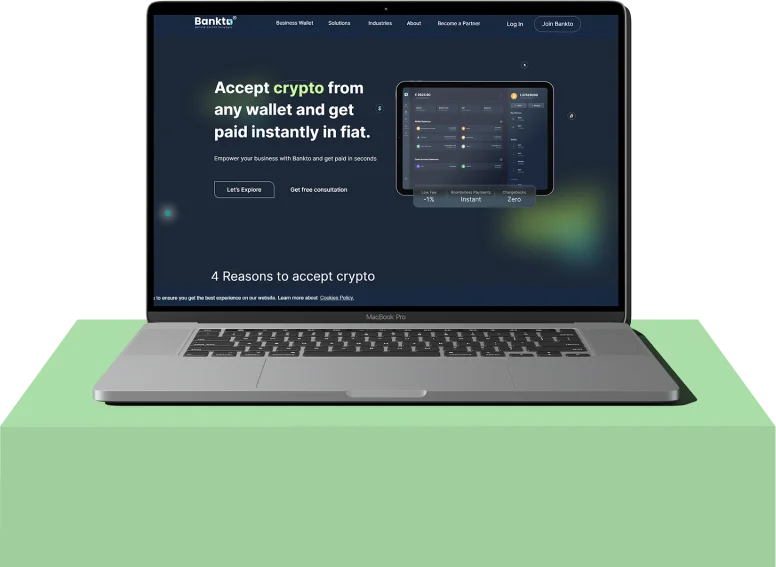
Bankto is a fascinating payment gateway platform where features are tailored brick-by-brick for efficient crypto transactions.
Read More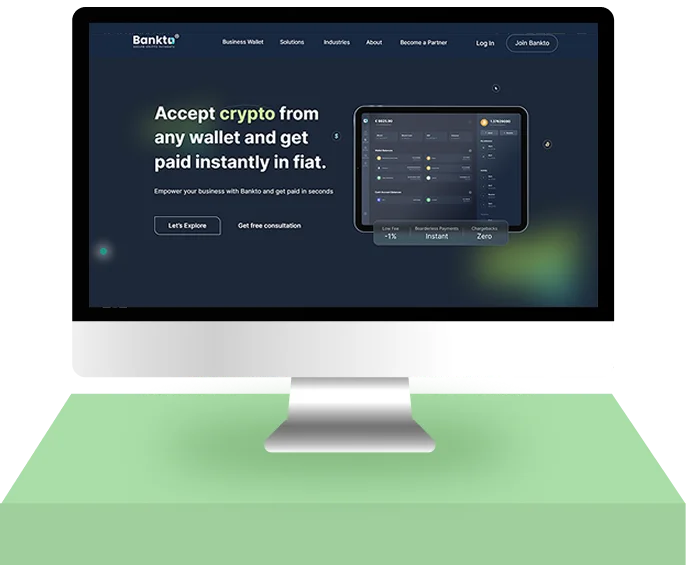

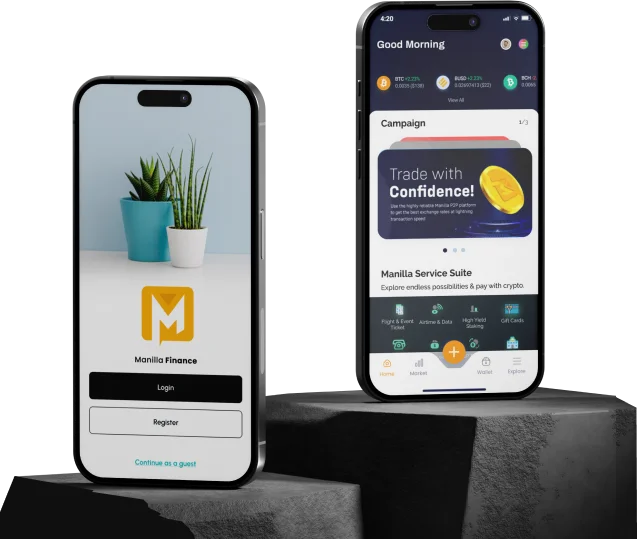
Manilla is a P2P-based exchange where innovative and trusted fintech services are guaranteed.
Read More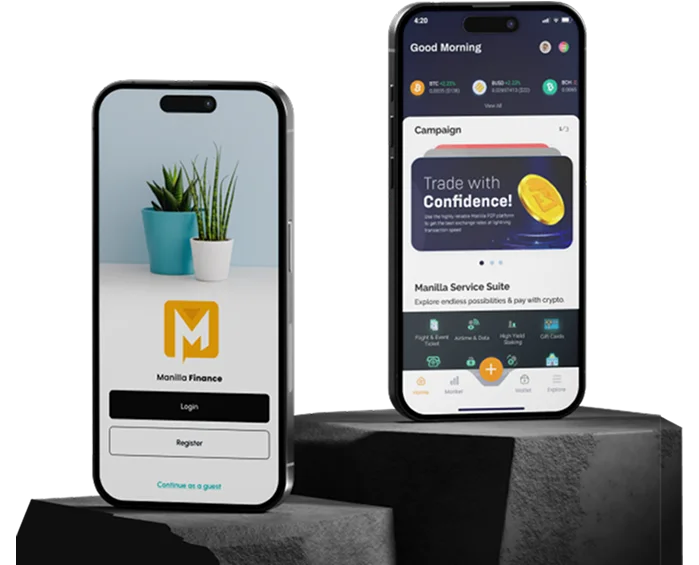

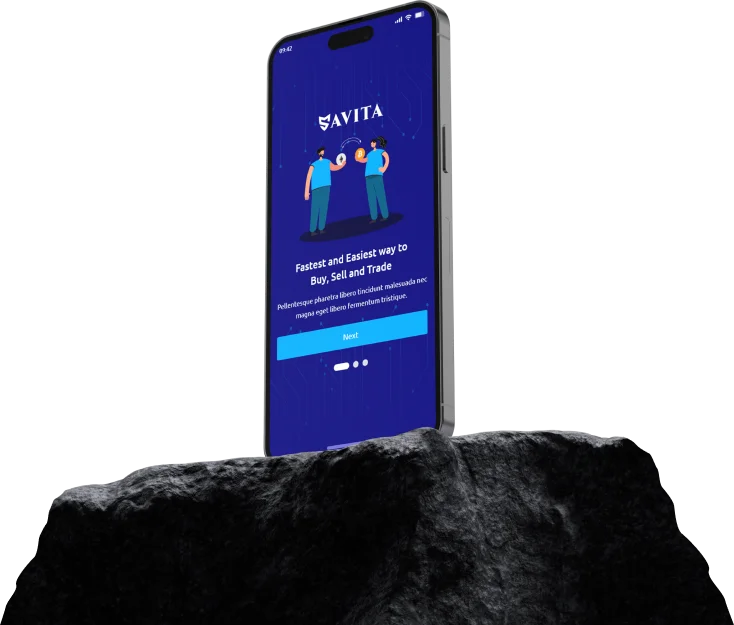
Savita is a global cryptocurrency exchange that emphasizes peer-to-peer order book trading. Being a customer-centric crypto exchange, Savita satisfies more than five thousand traders daily.
Read More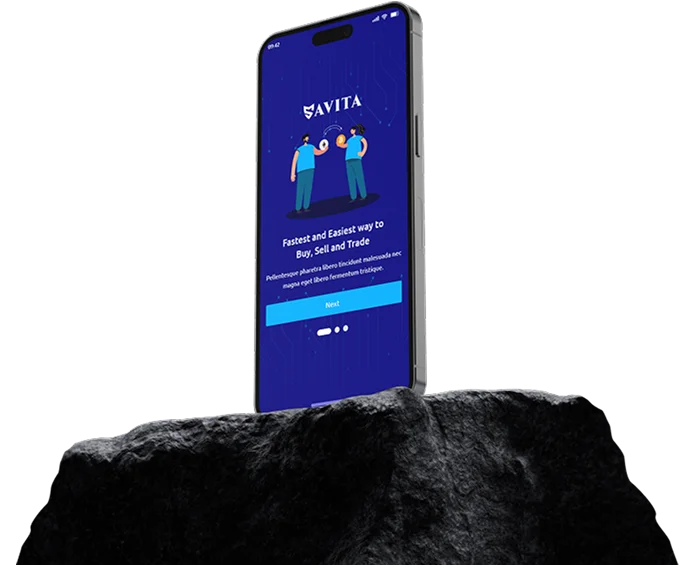

AltCoin Trader is a successful South African-based Centralized Crypto exchange platform that allows users to trade crypto to fiat or vice versa easily.
Read More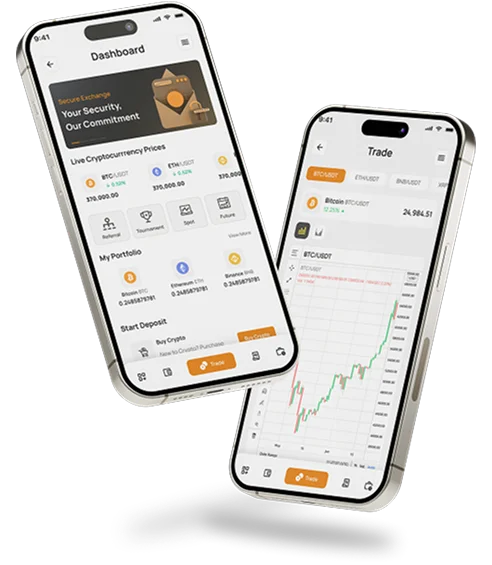

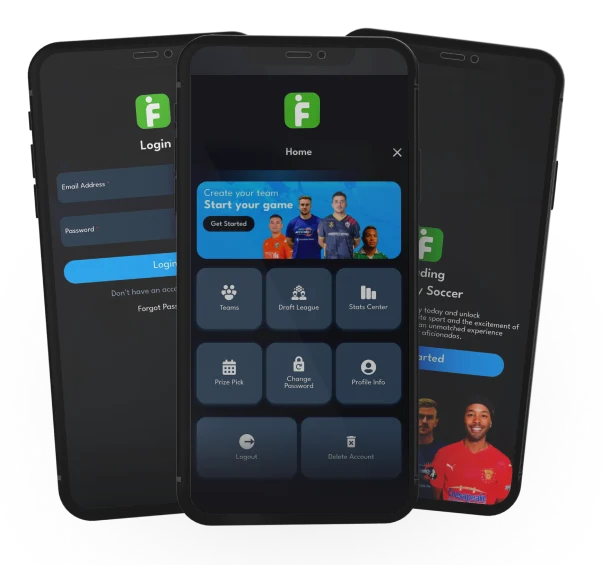
Fantasy Futbol is a next-gen fantasy sports platform where strategy meets skill in a fair and thrilling football experience.
Read More

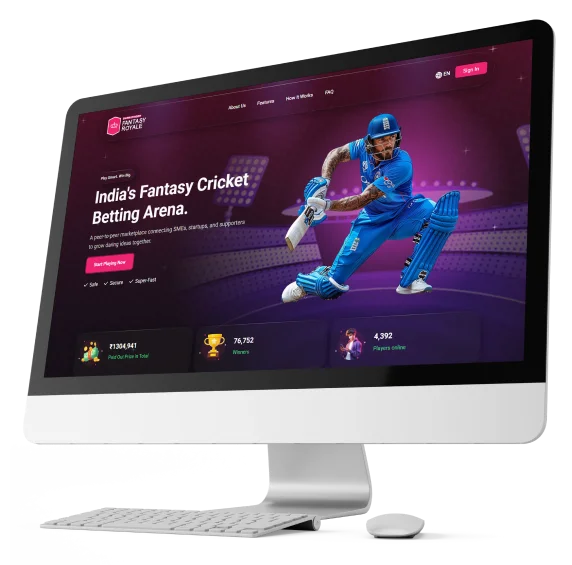
Fantasy Royal is an Indian-based P2P-powered Fantasy Cricket platform with secure, multi-level gameplay for thrilling and rewarding experiences.
Read More
Book your free token development consultation
Tell us what your token needs to do and who will hold it. In 30 minutes, a token architect will review your economics, recommend a standard and permission structure, and outline a realistic path to mainnet.
- The token type and standard your purpose actually calls for
- An honest view of tokenomics, contract permissions, audit timeline, and compliance exposure
- Clear next steps, whether or not you work with us
Frequently asked questions
Common questions about crypto token development, standards, tokenomics, cost, and compliance.
Related blockchain development services
What a token needs around it: contracts, a venue and a launch path
A deployed contract with no market is not a launch. These are the pages covering the contract engineering underneath the token, the platform that sells it, and the venue it trades on afterwards.
crypto launchpad development
The platform that runs the sale, with tier staking, vesting and automatic liquidity locking.
smart contract development
Audit, upgrade architecture and adversarial testing for anything that holds or controls supply.
crypto exchange development services
The venue the token lists on after the raise, from DEX pool to your own order book.
crypto wallet development company
The branded wallet holders keep the token in, with staking and reward claiming built in.
Get your supply, emissions and permission structure reviewed before anything is deployed.

Reviewed by :
Bal Ganesan
Blockchain Lead at Pixel Web Solutions, with 12 Yrs Experience
Last updated: August 2026
Freshness note: Token regulations, securities treatment, and exchange listing requirements change frequently and vary by jurisdiction. Details on this page reflect our understanding at the time of writing and are not legal advice.
Ready to launch your token?
Let's get the economics right first, then build contracts your investors can verify.
Get in Touch